A wound that lingers longer than expected can quietly shift from a minor inconvenience into something more serious. At first, it may have seemed manageable—a scrape, a blister, or a small break in the skin. But as days turned into weeks, and weeks into months, the lack of healing started to raise questions.
That’s where understanding a Skin Ulcer becomes important. This isn’t just a stubborn wound. It reflects something deeper happening beneath the surface—circulation issues, pressure damage, nerve changes, or even underlying disease.
When your skin stops repairing itself the way it should, your body is signaling that it needs attention. And knowing how to read that signal can change outcomes significantly.
What Is A Skin Ulcer?
A Skin Ulcer is an open sore that develops when the skin and sometimes the underlying tissue break down and fail to heal within the normal time frame. Unlike a simple cut or scrape, which follows a predictable healing process, ulcers tend to persist, deepen, or worsen over time.
You may notice exposed tissue, uneven edges, or drainage. In some cases, the area might not even be painful, which can make it deceptively easy to ignore.
This condition often affects people with underlying health concerns. Circulation problems, diabetes, and prolonged pressure all play a role. As a result, a Chronic Leg Ulcer is commonly seen in older adults or individuals with vascular disease.
Understanding the difference between routine injuries and ulcers is essential. That clarity helps guide early decisions about Skin Ulcer Treatment, which can significantly impact recovery.
Types Of Skin Ulcers
Different types of ulcers develop for different reasons. Recognizing the type helps guide the right approach to care.
Venous (Stasis) Ulcers
A Venous Skin Ulcer is the most common type. It develops when veins in the legs struggle to return blood back to the heart. This leads to fluid buildup and increased pressure under the skin.
You’ll usually find these ulcers on the lower legs, especially near the ankles. They may appear shallow but can persist for long periods. A Chronic Leg Ulcer of this kind often comes with swelling, discoloration, and itching.
Managing circulation is key, which is why Skin Ulcer Treatment often includes compression therapy alongside wound care.
Arterial (Ischemic) Ulcers
These ulcers occur when arteries fail to deliver enough oxygen-rich blood to the skin. Unlike venous ulcers, they tend to be painful and may appear on the feet or toes.
The edges often look sharply defined, and the surrounding skin may feel cool. Without proper Skin Ulcer Treatment, healing becomes extremely difficult because the tissue lacks nourishment.
Diabetic (Neuropathic) Ulcers
Diabetes changes how your nerves function. Over time, reduced sensation means you may not feel injuries when they happen.
This often leads to unnoticed wounds, especially on the feet. A Chronic Leg Ulcer in people with diabetes can develop quietly and worsen without obvious symptoms.
Here, Skin Ulcer Treatment involves pressure relief, blood sugar management, and specialized wound care. A Wound Care Dermatologist plays an important role in monitoring progress and preventing complications.
Pressure (Decubitus) Ulcers
Pressure ulcers form when prolonged force cuts off blood supply to certain areas. This commonly affects people who remain in one position for extended periods.
These ulcers can deepen quickly if not addressed. Early Skin Ulcer Treatment focuses on repositioning, cushioning, and maintaining skin integrity.
Vasculitic Ulcers
These are less common and linked to inflammation of blood vessels. The immune system mistakenly attacks the vessels, reducing blood flow.
Healing often requires addressing the underlying inflammation along with targeted Skin Ulcer Treatment.
Malignant Ulcers
In rare cases, a persistent ulcer may be linked to cancer. These ulcers may grow rapidly or change in appearance.
A Non-Healing Skin Wound California concern often includes ruling out malignancy through biopsy. Early evaluation by a Wound Care Dermatologist becomes critical in such cases.
What Causes Skin Ulcers?
Several factors contribute to the development of a Skin Ulcer. Often, it’s not just one cause but a combination that prevents proper healing.
Poor circulation is one of the leading factors. Conditions like venous insufficiency or arterial disease limit blood flow. This directly impacts how well your skin repairs itself.
Diabetes is another major contributor. It affects both circulation and nerve function. This combination increases the risk of unnoticed injuries evolving into a Chronic Leg Ulcer.
Pressure and friction also play3 a role. Constant pressure reduces oxygen supply to tissues. Without intervention, the skin begins to break down.
Inflammatory conditions can weaken the skin barrier. When combined with other factors, they make healing even more difficult.
Infections complicate the process further. Bacteria can delay healing and increase tissue damage. This is why timely Skin Ulcer Treatment is essential.
In rare situations, skin cancer may be the underlying cause. Persistent ulcers that change in size, shape, or texture should always be evaluated carefully.
Signs That A Skin Ulcer Needs Medical Attention
Not every wound requires urgent care. But certain signs should not be ignored.
If a wound lasts more than four to six weeks without improvement, it may no longer be a simple injury. At that point, it fits the profile of a Skin Ulcer.
Pain that worsens over time is another indicator. However, some ulcers—especially diabetic ones—may not hurt at all. That makes regular inspection important.
Discharge, odor, or swelling suggests infection. These signs often accompany a Chronic Leg Ulcer that has progressed without proper care.
Changes in color also matter. Black or gray tissue may indicate tissue death, which requires immediate attention.
Rapid changes in size or depth signal that the condition is evolving. Early Skin Ulcer Treatment can prevent complications and support healing.
How Dermatologists Diagnose And Treat Skin Ulcers
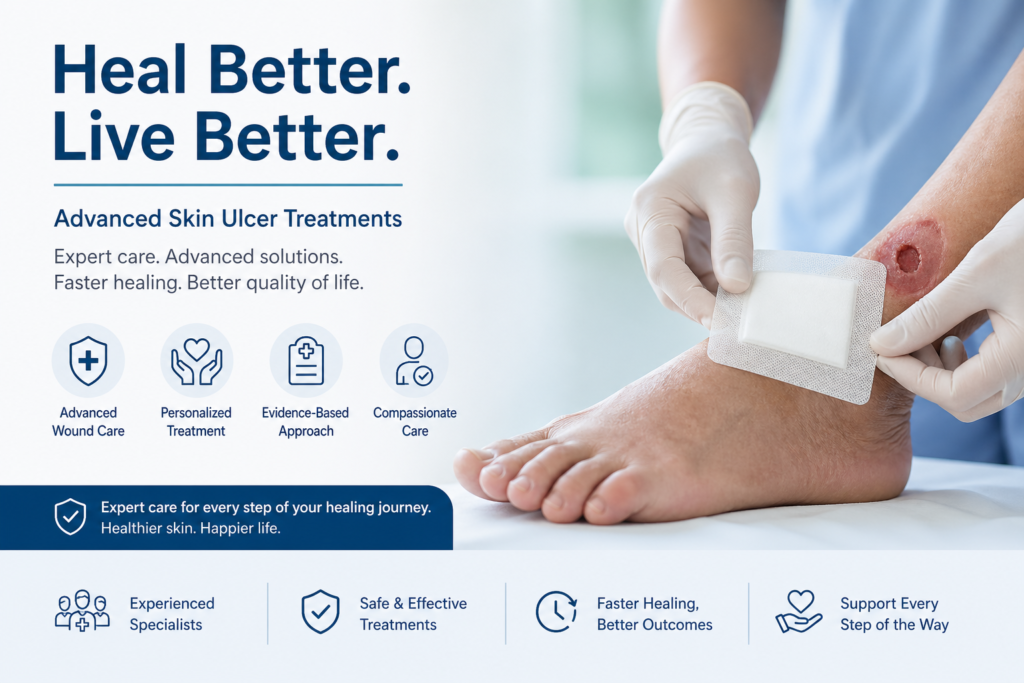
Managing a Skin Ulcer involves more than just covering it with a bandage. It requires a detailed approach that addresses both the wound and its cause.
Diagnosis
A dermatologist begins with a visual examination. They assess the size, depth, and surrounding skin.
In some cases, tests are needed. A wound culture can identify infection. A biopsy may be performed if there’s concern about cancer, especially in a Non-Healing Skin Wound California scenario.
Wound Debridement
Removing dead tissue helps the wound heal. This process, known as debridement, creates a healthier environment for new tissue growth.
It’s a key step in effective Skin Ulcer Treatment.
Advanced Wound Dressings
Modern dressings do more than cover wounds. They maintain moisture, protect against bacteria, and support healing.
A Wound Care Dermatologist selects the right type based on the ulcer’s condition.
Compression Therapy
For a Venous Skin Ulcer, compression improves blood flow. It reduces swelling and supports healing.
This is one of the most effective treatments for venous-related ulcers.
Topical Medications
Antibiotics, growth factors, and other topical agents may be used. These support healing and prevent infection.
Addressing The Underlying Cause
Without treating the root issue, ulcers often return. That’s why managing diabetes, improving circulation, or reducing pressure is essential.
A Chronic Leg Ulcer often requires coordination between specialists.
Surgical Intervention
In severe cases, surgery may be needed. This could involve skin grafting or correcting circulation issues.
For persistent cases, especially a Non-Healing Skin Wound in California, surgical options may offer a path forward.
Skin Ulcer Vs Wound — What Is The Difference?
Not all wounds are ulcers. Understanding the distinction matters.
A typical wound heals within a predictable timeframe. It follows a natural process: inflammation, tissue formation, and remodeling.
A Skin Ulcer, on the other hand, disrupts this process. Healing stalls, and the wound persists.
This difference affects how care is approached. A simple wound may only need basic care. But a Chronic Leg Ulcer requires specialized attention.
The distinction also impacts insurance coverage and treatment planning. Proper classification ensures access to appropriate Skin Ulcer Treatment.
Why Choose A Dermatologist For Skin Ulcer Care?
Skin health is complex. When healing doesn’t happen as expected, specialized knowledge becomes essential.
A Wound Care Dermatologist understands both the surface and deeper layers of the skin. They can identify subtle changes that may indicate underlying issues.
They also play a key role in diagnosing conditions like a Venous Skin Ulcer or identifying a Non-Healing Skin Wound in California that may require further investigation.
Care often involves coordination. Circulation issues may require vascular specialists. Diabetes management may involve endocrinologists.
A dermatologist helps bring these pieces together into a cohesive plan.
For individuals dealing with a Chronic Leg Ulcer, this comprehensive approach makes a meaningful difference in outcomes.
Get Skin Ulcer Treatment In Southern California
Access to specialized care can shape how effectively an ulcer heals. In Southern California, treatment options include advanced wound care, diagnostic evaluation, and coordinated care plans tailored to individual needs.
A Wound Care Dermatologist evaluates each case thoroughly, ensuring that the chosen Skin Ulcer Treatment addresses both symptoms and root causes.
Conclusion
Healing doesn’t always follow a straight path. When your skin stops responding the way it should, it’s worth paying attention. A persistent wound can reveal deeper health concerns that deserve timely care.
Understanding a Skin Ulcer helps you act earlier, choose the right treatment, and avoid complications. With the right approach—and guidance from Advanced Dermatology & Skin Cancer Specialists—you can move toward recovery with clarity and confidence.
Take The Next Step Toward Healing
If a wound isn’t improving or keeps returning, it may need expert care. Early evaluation can prevent complications and support faster recovery. Connect with a specialist today to explore personalized treatment options that fit your needs. Call us at one of OUR CONVENIENT Southern California locations:
| Corona: 951-582-0644 | Riverside: 951-525-3548 | Moreno Valley: 951-656-2200 |
| Temecula: 951-303-6900 | Murrieta: 951-433-5410 | Menifee: 951-566-5634 |
| Palm Springs: 760-832-6277 | La Quinta: 760-564-8200 | Hemet: 951-929-3376 |
| Victorville: 442-255-4130 |