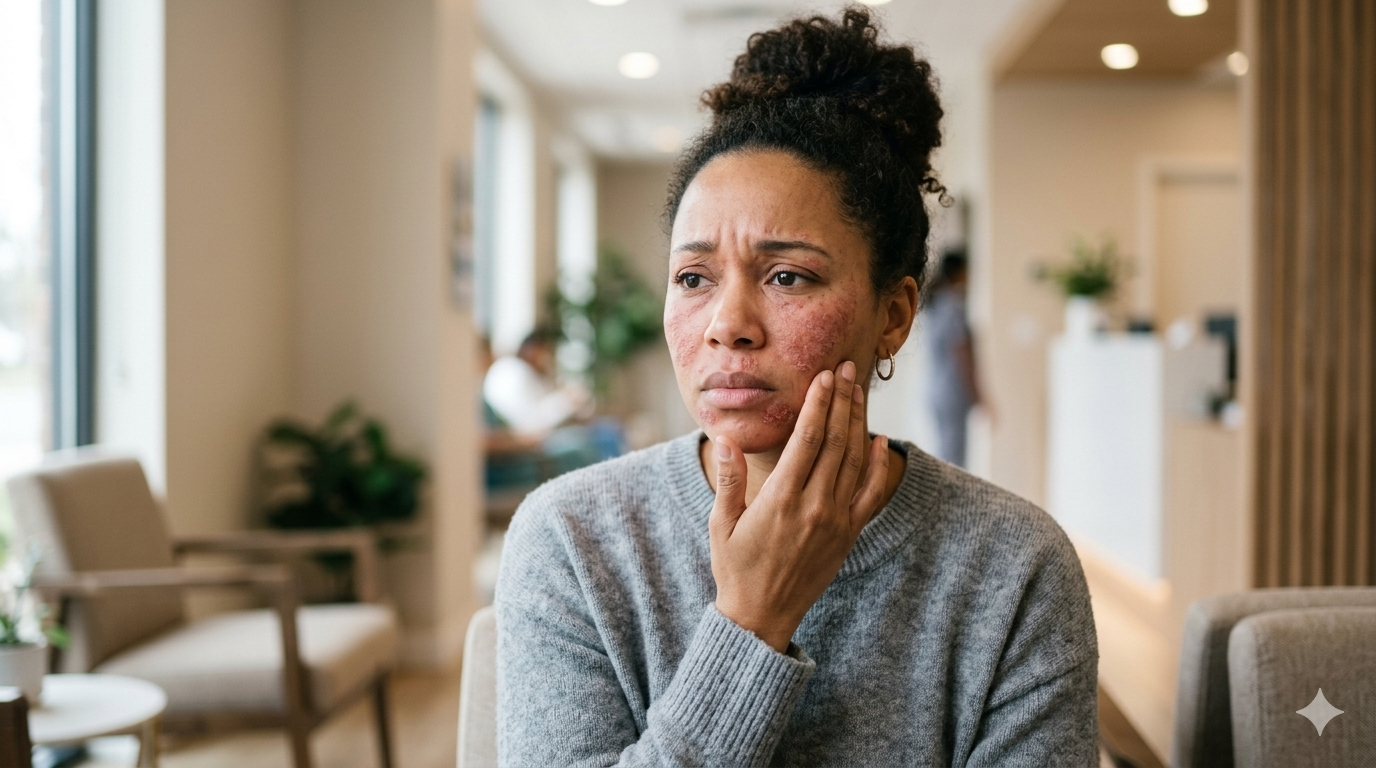

If you suffer from rosacea, then you likely take all of the steps you can to control it. Some people can manage their rosacea symptoms when they avoid their rosacea triggers, such as prolonged sun exposure and avoiding alcoholic beverages in addition to using one or more of today’s popular rosacea treatments.
Popular rosacea treatments include prescription azelaic acid or metronidazole creams and over-the-counter products that contain green tea or cannabidiol (CBD).
However, If you have tried popular rosacea treatments and still suffer from rosacea flare-ups, consider trying one of the newer rosacea treatments listed below
1. Topical Brimonidine
One rosacea treatment that some people find helpful to reduce rosacea facial redness is a prescription medication called topical brimonidine, or brimonidine tartrate gel. While other topical medications designed to reduce rosacea facial redness often work by calming skin inflammation, brimonidine instead constricts the dilated blood vessels in the skin that can cause skin redness.
This rosacea treatment is easy to use, and typically, a person must apply just a small amount to their face once a day to potentially achieve rosacea redness relief all day long.
2. Ivermectin
Another lesser-known rosacea treatment is a prescription medication called ivermectin. Ivermectin is considered an anti-parasitic drug, and it is believed to help control rosacea symptoms by soothing skin inflammation and also potentially killing the Demodex mites that some dermatologists suspect contribute to the development of rosacea.
In clinical studies, a one-percent strength topical ivermectin cream helped control moderate-to-severe papulopustular rosacea even more effectively than popular metronidazole cream after twelve weeks of use.
3. Topical Sodium Sulfacetamide-Sulfur
Another rosacea treatment that can be used alone or alongside other medications designed to control rosacea symptoms is a topical antibiotic called sodium sulfacetamide. While this medication can be prescribed alone, it is often combined with a small amount of sulfur which increases its effectiveness.
Sodium sulfacetamide helps control rosacea symptoms by calming skin inflammation and killing bacteria on the skin that can contribute to the formation of pustules. Sulfur encourages the exfoliation of excess skin cells that can contribute to over-keratinization of skin, acts as an antiparasitic to reduce the number of Demodex mites on the skin, and also kills bacteria.
To control rosacea symptoms, a topical Sodium Sulfacetamide-Sulfur lotion or cream is typically applied to the face twice a day for up to 8 weeks.
4. Laser Therapy
If you are tired of applying medications to your face every day and would like to instead try a treatment that your dermatologist can perform inside of their office, then you should consider laser therapy for rosacea.
Several laser types can be used to help reduce rosacea symptoms, and some help treat some rosacea symptoms more effectively than others.
For example, an Erbium YAG laser can be used to reduce or even eliminate the appearance of visible blood vessels and treat phymatous, which is an overgrowth of skin tissue on the nose that often accompanies type 3 rosacea.
A pulsed dye laser, on the other hand, helps reduce the skin redness and inflammation that rosacea can cause while also reducing the appearance of prominent blood vessels and eliminating vascular lesions.
CO2 lasers and intense pulsed light (IPL) machines can also be used to reduce the various symptoms of rosacea.
While the results of rosacea laser therapy treatments can vary, people who obtain laser therapy to reduce the appearance of unwanted blood vessels tend to experience a 50 to 75 percent improvement in their symptoms that lasts up to five years after just one to three laser treatments.
If you suffer from rosacea and have struggled to control your symptoms with today’s most popular rosacea treatments, then try one or more of these four newer, little-known rosacea treatments to help finally get your symptoms under control. Contact the skin experts at Advanced Dermatology & Skin Cancer Specialists to schedule an appointment with one of our experienced dermatologists today.