Taking good care of your skin is very important at any age, but it’s essential during your senior years. As one ages, skin issues may become more prevalent. Skin changes tend to occur with age, but fortunately, many issues can be prevented with proper care. If you are a senior, consider the following tips for better skin health.
1. Drink Up
Some seniors forget to stay hydrated and neglect to drink enough water. If you aren’t drinking enough water, you may become dehydrated, which is not only detrimental to your general health but bad for your skin as well. To ensure you don’t forget to drink up, you might try setting a reminder to drink water at specific times during the day. Try to drink about eight glasses of water a day.
2. Raise the Humidity in Your Home
When you use indoor heating, the air becomes dry. Dry air can negatively affect the skin, particularly for seniors. If you have dry and itchy skin, check the humidity levels in your home with a hygrometer. Try to keep the humidity between 30 and 60 percent at all times.
If the humidity constantly drops below 30 percent, invest in a humidifier for your home. Alternatively, you might place a few shallow bowls of water throughout the home. Also, dry your wet clothes on an indoor rack or hangers, as doing so may also help disperse moisture throughout your home. If you use a humidifier, be sure to disinfect it regularly according to directions to prevent bacteria and mold growth.
3. Choose Healthy, Nutritious Foods
As you age, your skin needs special attention from the inside as well. Choosing healthy foods can help keep your skin looking radiant. Avoid excess sugar and concentrate on plenty of fresh fruit and vegetables. Fruits and veggies contain antioxidants which helps prevent the effects of damage to skin cells.
If you’re looking for more ways to enhance your diet with antioxidants, flavor your food with herbs. Turmeric, clove, oregano, and cinnamon are a few herbs that contain these healthful properties.
4. Prevent Bed Sores
Many seniors in nursing homes become bedridden. If you happen to be bedridden for whatever reason, you may be prone to developing bed sores or pressure ulcers on your skin. Bed sores may lead to infection, but it can be prevented simply by changing positions frequently. Keeping the skin clean and dry may also help prevent skin ulcers from developing.
5. Be Mindful of Ultraviolet Rays
Exposure to the sun may cause age spots and wrinkles as you age. Prevent skin issues by using a sunscreen before going outside. On sunny days, you might also wear a wide-brimmed hat and try to stay in the shade. If your skin tends to dry out or peel when exposed to the sun, wear long sleeves and protective clothing.
6. Ditch the Soap
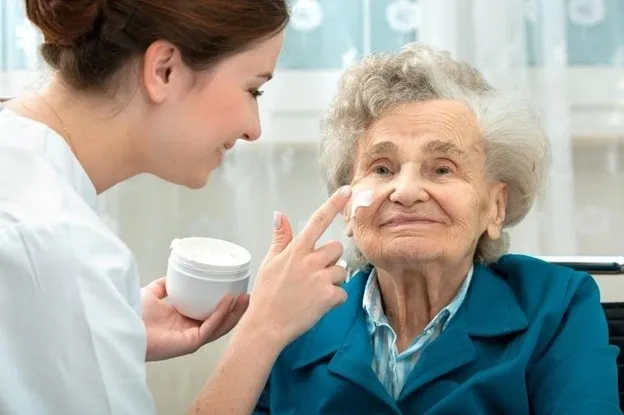
Soap tends to dry out aging skin, which may lead to wrinkles. Instead of bar soap, opt for a fragrance-free cleanser with natural moisturizers. Read the ingredients and choose dermatologist-tested cleansers that are gentle on the skin. After bathing, use a moisturizer.
Last but not least, see your dermatologist on a regular basis. As you age, you become more prone to skin issues and the doctor will check for problems before they become serious. It is also a good idea to have your dermatologist examine you for skin cancer or precancerous growths because the risk often increases with age .
Keep a record of your daily habits and any skin issues you have noticed. If you develop any problems with your skin or notice changes, discuss this with your dermatologist.