
Many people deal with dry skin or blemishes on occasion, and these conditions usually subside with time and perhaps some over-the-counter treatment. A visit to the dermatologist is rarely necessary unless the condition is stubborn. However, there are four symptoms that always warrant a call to the dermatologist for diagnosis and treatment.
1. Red, Scaly Patches on Your Scalp
Mild dandruff that shows up primarily when the air is dry is one thing. Red, scaly, itchy patches on your scalp are quite another. These patches are typical of psoriasis, a condition that causes your skin cells to replicate too quickly without shedding properly.
Psoriasis can appear anywhere on the body, but it is most common on the scalp. The patches may burn or feel sore, and they are often associated with hair loss.
Since psoriasis does not typically get better on its own, you should absolutely visit your dermatologist for treatment. They can diagnose psoriasis visually or with a simple skin biopsy.
Depending on the severity of your symptoms, your doctor may prescribe corticosteroids, vitamin A derivatives, or antibiotics. These medications won’t cure the condition, but they do reduce the severity and frequency of flare-ups.
2. Persistent Facial Redness
If you notice that the central part of your face is consistently red, hot, and tender, you might have rosacea. This condition is common in fair-skinned, middle-aged women, but it can appear in anyone at any age. Other symptoms include acne-like bumps, eye dryness and irritation, and a swollen nose. Rosacea is often mistaken for acne, but it won’t respond well to over-the-counter acne medications.
Your dermatologist can diagnose rosacea simply by looking at your skin. There is no cure for rosacea, and managing it often involves a combination of lifestyle changes and medications. Your dermatologist can help you identify what triggers your flare-ups — alcohol, spicy foods, emotions, exercise, and sun exposure are common triggers.
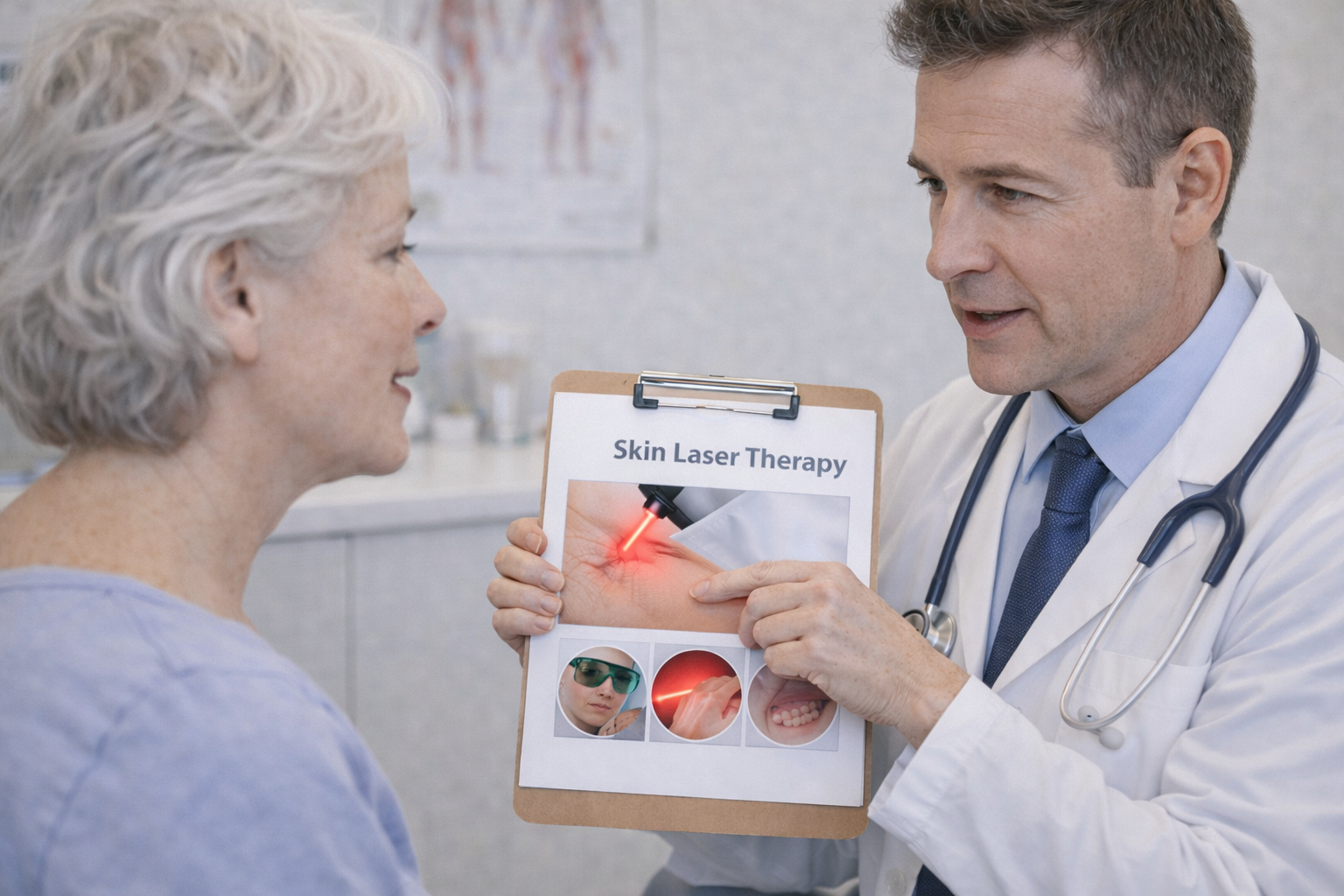
In addition to avoiding your triggers, you may also be prescribed oral antibiotics, vitamin A derivatives, and medications like azelaic acid to reduce redness. Some patients have experienced good results from laser therapy, which helps ease inflammation in the blood vessels.
3. Dark Patches on Your Face
If you develop symmetrical brown patches on your chin, the bridge of your nose, your forehead, or your cheeks, you may be suffering from melasma. This condition causes portions of your skin to produce too much pigment. It is common during pregnancy, in women who take birth control pills, and in those suffering from thyroid disease.
Although melasma is not painful, it can make you very self-conscious. Another reason to seek treatment is to ensure that an underlying condition, such as thyroid disease, is not triggering the melasma. Treatments like chemical peels and microdermabrasion can help lessen the appearance of dark spots. Women often find that the spots fade after they give birth or change birth control medications.
4. Open Sores That Don’t Heal
Hopefully, you know to see your dermatologist about any suspicious moles that grow or change shape. Did you know you should also seek treatment for open sores that don’t heal — and for those that heal and then come back?
This could be a symptom of a type of skin cancer called squamous cell carcinoma. It’s easy to treat in its early stages, so don’t ignore it. Other symptoms to watch out for include raised growths with a depressed area in the center, and scaly patches that crust over and bleed.
Too often, patients ignore skin symptoms in hopes that the skin will heal on its own. This approach works for standard blemishes and occasional dryness, but not for the symptoms above. Treatments are available; you do not have to go on living with scaly patches, redness, or other irritating symptoms. Contact the dermatologists at Advanced Dermatology & Skin Care Specialists to schedule an appointment.